
Lower School (K-4)
Lower School (K-4)

Building a foundation for joyful, lifelong learning.
At Charles Wright Academy, our Lower School nurtures curiosity, confidence, and collaboration. With dedicated faculty and a dynamic program grounded in project-based learning and real-world exploration, our students actively participate in their education, discover their passions, and support one another academically and socially.
Our Lower School students rotate through our specialist classes each week, which are designed to spark curiosity and expand skills beyond the traditional classroom. We offer Library, Music, Spanish, STEM (Science, Technology, Engineering, and Math), and Visual Arts.
 Library: Lower School students visit the library weekly to build strong literacy habits and early research skills. Beginning in Kindergarten, students learn what a library is and how to check out and care for books. As they move through the grades, they explore different types of books, genres, and the life cycle of a book—from creation to upcycling. By fourth grade, students are confidently using nonfiction texts and research databases while learning how to evaluate sources and gather information independently.
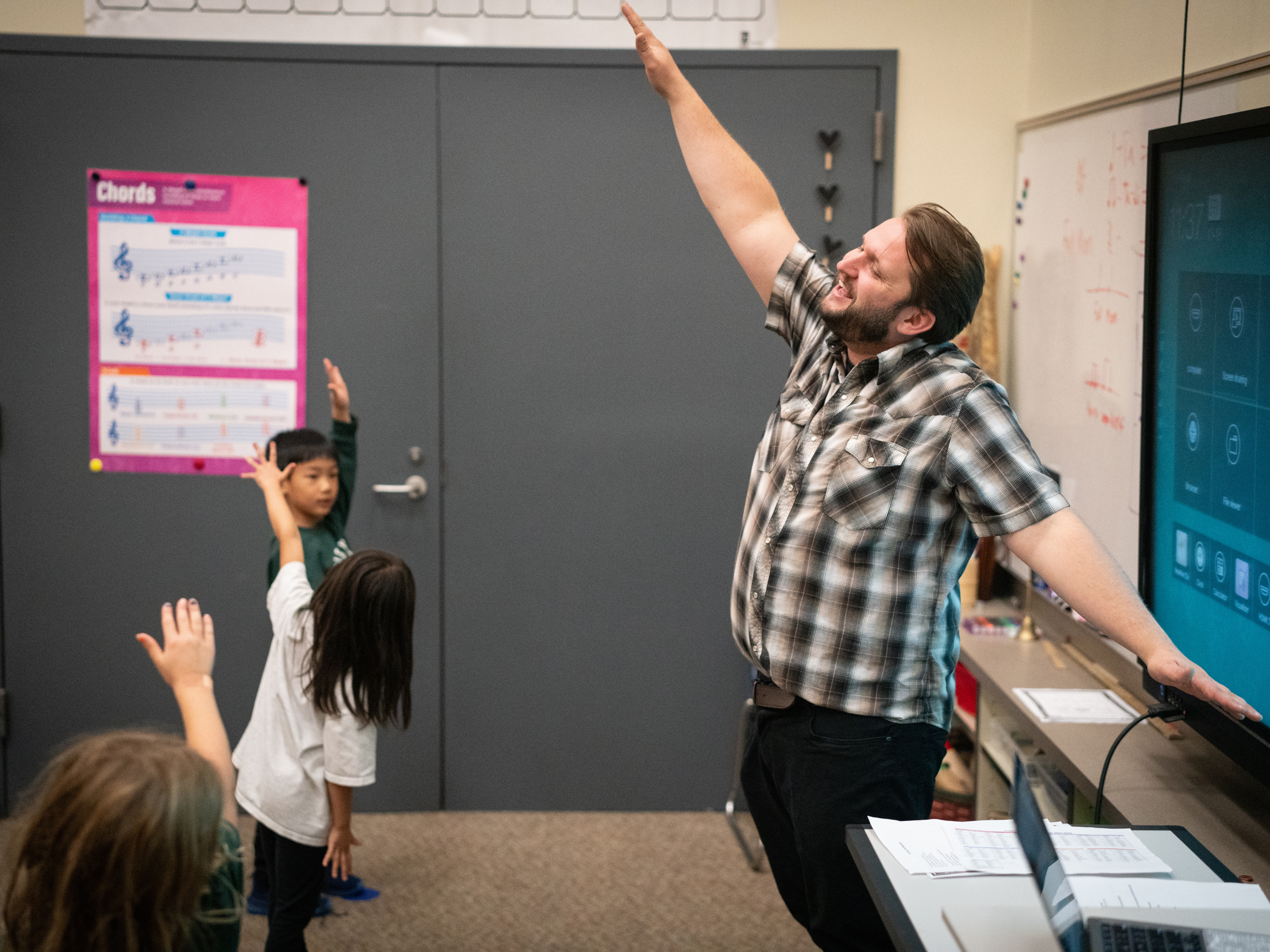
 Music: Weekly music classes nurture creativity, confidence, and collaboration. In the early grades, students explore their voices, movement, tempo, and volume while learning to listen and respond to music. As they grow, students develop rhythm, melody, and coordination through instrument play and movement. By third and fourth grade, students deepen their musical understanding through solfege, rhythm patterns, recorder, and ensemble instruments, building music-reading skills and performance confidence.
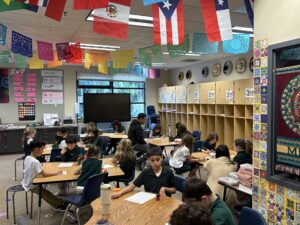 Spanish: Spanish instruction introduces students to language learning through conversation, play, and cultural connection. In Kindergarten and first grade, students focus on greetings, sounds, colors, and simple vocabulary. As students progress, they expand their ability to use language in context through sentences, commands, and interactive activities. By third and fourth grade, students begin exploring verb patterns, days of the week, and calendar language, applying their skills through role-playing and everyday conversation.
 STEM: Hands-on STEM learning encourages curiosity, critical thinking, and real-world problem solving. Younger students explore living things and animal adaptations, building observation and inquiry skills. In second and third grade, students investigate ecosystems, weather patterns, and environmental challenges. By fourth grade, students examine Earth’s systems past, present, and future, developing a deeper understanding of science concepts and their impact on the world around them.
 Visual Arts: Weekly art classes inspire creativity, confidence, and visual storytelling. Early experiences focus on shapes, color, and fine motor development through guided exploration. As students advance, they experiment with abstract design, landscapes, and artist-inspired techniques. By third and fourth grade, students develop more advanced skills, including three-dimensional drawing, shading, and sketchbook study, learning to observe closely and express ideas visually.
What is Project-Based Learning?
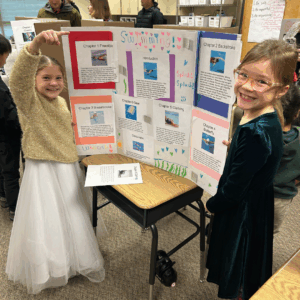
Project-Based Learning (PBL) is a dynamic approach in which students actively explore real-world problems and challenges and acquire transferable knowledge. It starts with a driving question, offers students voice and choice, inspires and requires inquiry and innovation, and has an outcome shared with others. It results in students developing deeper content knowledge, collaboration, and creativity.
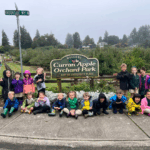
Kindergarten – Life Cycles and Pollinators
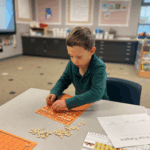
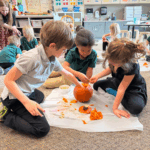
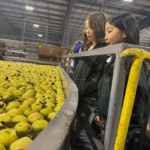
In Kindergarten, students learn about the various animal and plant life cycles throughout the school year. Through these experiences, students begin to understand and appreciate growth and change, building respect for living things. We begin the year with an in-depth study of the life cycle of apples, providing students with a rich connection to the state we live in. From there, Kindergarten students move on to the lifecycles of pumpkins later in the fall, butterflies in the early spring, and plants in the late spring. As students explore the different life cycles, we ask them what they are curious about and dive deep into what they are interested in. In Kindergarten, we also begin to connect our reading, writing, and math to our PBL topics throughout the year.
First Grade – Farm to Table
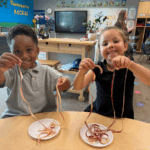
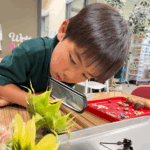
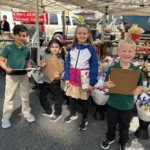
In our exciting first grade PBL units, students dive into the journey of how food travels from the farm to our tables. This hands-on exploration covers everything from the vibrant world of farmers’ markets to the fundamentals of nutrition. Students will engage in gardening activities, learn how fruits and vegetables grow, and discover the importance of healthy eating. Through interactive lessons and fun projects, students develop a deeper understanding of where their food comes from and how to make nutritious choices. They will create their own mini farmers’ market in the spring. The market showcases their knowledge and understanding of plant lifecycles, healthy eating, and the process and importance of providing goods and services to a community. The market features flower and veggie starts and kid-made crafts highlighting students’ understanding with their families and friends. Join us as we plant seeds of knowledge, watch curiosity bloom, and celebrate our learning journey throughout the year!
Second Grade – Sustainability
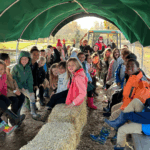
In our second grade PBL units, students will explore how communities function and how they can contribute positively through environmental stewardship. Starting in the fall, second graders dive into composting, learning about its benefits and practical applications to make our school and community greener. During the winter months, students focus on recycling, understanding its role in conserving resources, protecting the environment, and finding ways to advocate for more recycling in their communities. In the middle of the year and through spring, students turn their attention to upcycling, using creativity to repurpose materials and reduce waste. This comprehensive approach will foster a deeper understanding of sustainability while developing essential skills in critical thinking, collaboration, and communication.

Third Grade – Nisqually Watershed
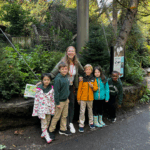
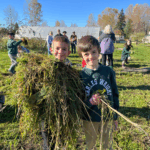
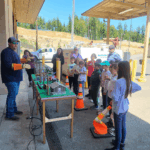
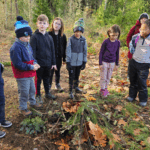
Third graders spend the year exploring the Nisqually Watershed from the top of Mt. Rainier down to the Puget Sound. Through field experiences and classroom study, students dive into various topics such as the human impact on our natural forest resources, why it’s important to restore salmon habitats, and who played a part in shaping the area around Mt. Rainier. Some of our many studies include research projects, persuasive speaking, art projects, and nature observations. Third grade students also have the opportunity to go on their very first overnight trip to the Mt. Rainier Institute, which allows students to dive deep into their year-long exploration.

Fourth Grade – Washington State
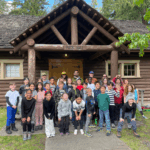
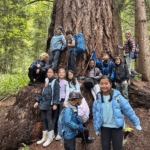
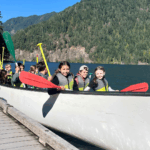
Fourth grade at Charles Wright Academy is all about exploring our beautiful state of Washington! Students dive into investigating the economy, ecology, and culture of the state through hands-on exploration, field experiences, and by asking questions that require critical thinking and taking action. Students will travel to the Olympic Peninsula to explore an old-growth forest and learn about earth science and systems before heading to the Columbia Plateau, where they will be immersed in learning about our economy and ecology. Through exploring our earliest inhabitants, modern-day peoples, and our state government, students will learn more about their role in society and how the past helps shape our future.

Literacy
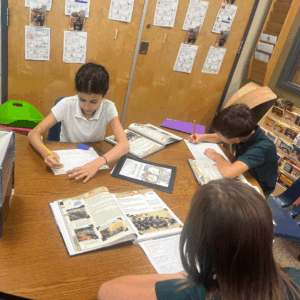
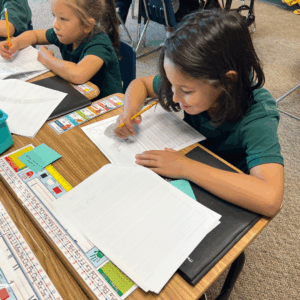
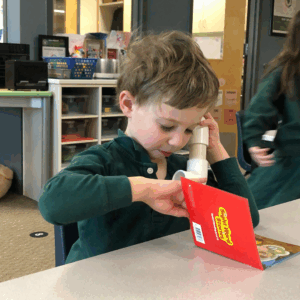
Charles Wright Academy’s commitment to nurturing young readers and writers is evident in our comprehensive literacy program. Fundations’ multimodal approach to reading, spelling, and handwriting makes learning to read fun for students and teachers. It lays the groundwork for lifelong literacy through a proven approach to structured literacy aligned with the science of reading. The research-based approach of the Fundations program allows teachers to confidently present a carefully structured reading, spelling, and handwriting curriculum using engaging materials and multimodal techniques. The Reading and Writing Workshop is rooted in Lucy Calkin’s research, preparing students for any reading and writing task, turning students into lifelong, confident readers and writers who display agency and independence. The Reading and Writing Project’s approach to instruction recognizes that “one size fits all” does not match the realities of classrooms.
Mathematics
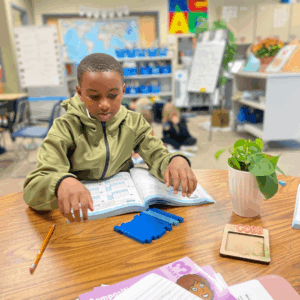
The Lower School mathematics program builds a solid understanding of interconnected concepts, procedural skills, fluency, and the ability to apply concepts inside and outside the classroom. Using Carnegie Learning Math Solutions, a research-based, standards-aligned math curriculum proven to increase student achievement and engagement. The program uses a problem-based learning approach that helps students develop critical thinking and analytical skills that are essential for math success and align with the Tarrier Traits.
The Carnegie Learning Math Solutions program is based on a blended learning model that combines teacher-led instruction with digital tools, MATHbook (a record of student thinking, reasoning, and problem-solving available as printed texts or eBooks to support mathematical thinkers who are active learners that participate in class), Skills Practice (a targeted practice of skills and math concepts to provide additional practice worksheets), math talks, attention to equity and habits of mind, use of manipulatives, and AI gamified play-based practice.
STEM: Science, Technology, Engineering, and Math
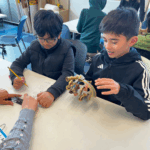
Innovation, critical thinking, and creativity are fostered during STEM classes in the Lower School Innovation Lab. Students’ curiosity identifies learning targets that drive exploration and design projects. In addition, information and analysis are integrated into library classes and project-based learning. Students learn where to find information, how to evaluate it, and how to use it effectively in reports, projects, and presentations.
Charles Wright Academy follows the Next Generation Science Standards (NGSS) as our K-12 science content standards. Standards set the expectations for what students should know and be able to do. The NGSS was developed by states to improve science education for all students. A goal for developing the NGSS was to create a set of research-based, up-to-date, K-12 science standards. These standards allow local educators to design classroom learning experiences that stimulate students’ interests in science and prepare them for college, careers, and citizenship. A high-quality science education means that students will develop an in-depth understanding of content and key skills – communication, collaboration, inquiry, problem-solving, and flexibility – that will serve them throughout their educational and professional lives.
8:1
Student to Teacher Ratio
5
Specialist Offerings
107
Acres of Space for Students to Explore
K-4
Grades Served